Picture yourself sipping coffee as kayakers glide past your backyard. Buying on the water in Foster City can deliver that everyday calm plus instant access to paddle sports and parks. To make a confident choice, you need to understand how the lagoons work, what dock rights really mean, and how HOAs, permits, and long‑term resilience factor into value. This guide walks you through the essentials so you can focus on the lifestyle you want with eyes wide open. Let’s dive in.
How Foster City’s lagoons work
Foster City was planned and built around a man‑made lagoon system beginning in the late 1950s, transforming former marshland into neighborhoods connected by water. You’re not just looking at pretty views. The lagoon is also active infrastructure that manages storm drainage and recreation as part of the city’s original master plan. You can read more about the city’s origin story in the official history of Foster City.
Lagoon water levels are controlled and typically average around six feet in many areas, with seasonal adjustments made for summer, winter, and storm events. That matters for boat size, dock styles, and day‑to‑day use. For operations and seasonal changes, check the city’s update on lagoon levels and management.
There are clear boating rules that shape how you can enjoy your dock. Foster City bans gasoline and diesel engines on the lagoons. Allowed craft are sailboats, electric boats, and human‑powered options like kayaks and paddleboards. The speed limit is 5 mph, and the city promotes shared‑use etiquette across swimmers and paddle craft. See the official guidance in the city’s Be Aware and Share: Water Activities.
What waterfront homes look like
Water‑oriented homes here include single‑family houses, two‑story townhomes, and multi‑story condos planned around the lagoon edges and island neighborhoods. Inventory tends to cluster on the islands and along the outer lagoon perimeter. To see how streets and tracts relate to the water, consult the city’s neighborhood map.
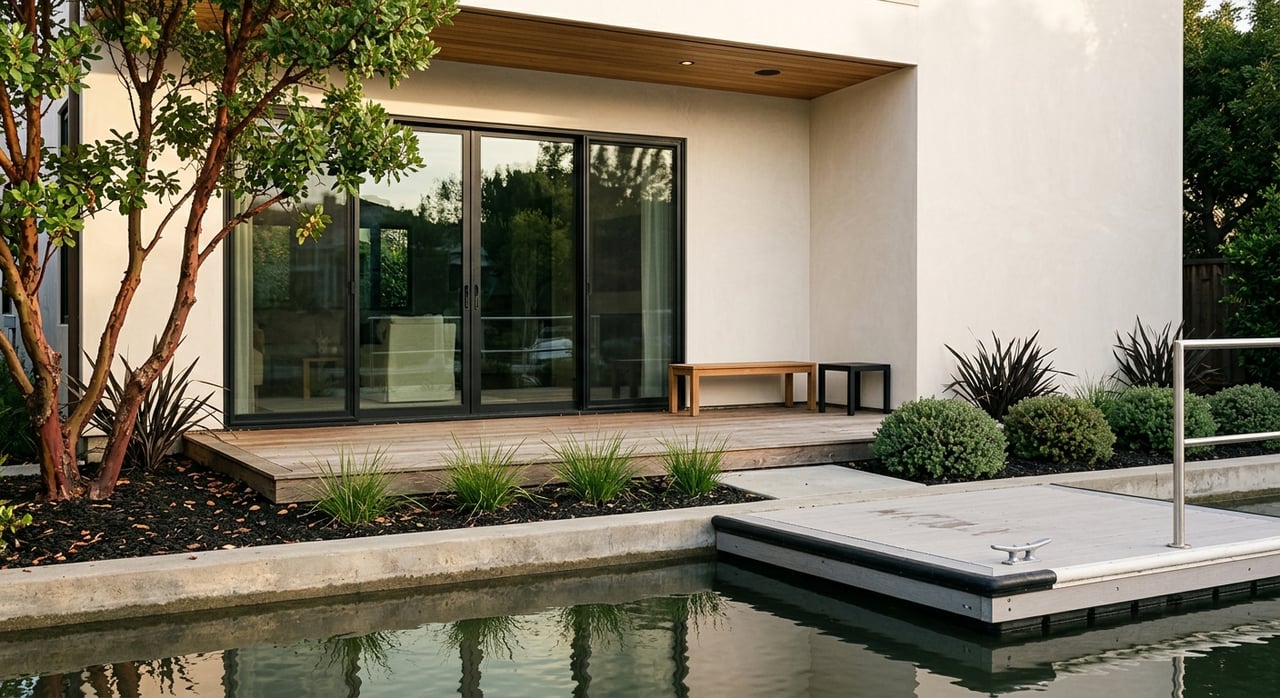
Typical features include smaller rear yards or terraces that back to a seawall or boardwalk, sliding‑glass doors and balconies facing the water, and access to private, assigned, or community docks. Because many lagoon areas are shallow, you’ll often see slips sized for small electric boats, kayaks, and paddleboards. Expect more glass, more light, and everyday water views that make living spaces feel larger.
Lifestyle is a major draw. You’ll be close to parks, the Bay Trail, and community water events that bring neighbors together. The city also operates public launch points, seasonal concessions, and boat programs, which make it easy to get on the water with friends. Explore facilities and programs at the Foster City Boat Park.
Rights, HOAs, and what to ask
Dock and boat rights are not one‑size‑fits‑all. In Foster City, a slip may be deeded to an individual property, assigned and managed by an HOA, held by license or easement, or tied to a community marina arrangement. Listings often state whether a slip is deeded or an HOA amenity, but you should confirm the deed, CC&Rs, and any recorded easements.
HOAs commonly manage waterfront features and shared facilities. Dues may cover items like pools, private beaches within a complex, kayak storage, or building insurance, and associations can levy special assessments for capital repairs. Because seawall, dock, and dredging work can be significant, understanding who pays for what is a key part of due diligence.
Buyer checklist: key questions
- How are dock or slip rights documented for this property: deeded, HOA‑assigned, or a license?
- Who is responsible for maintaining the seawall, dock, and shoreline protection, and where is that written?
- Are there any pending or recent special assessments for levee, seawall, dock repairs, or dredging in this neighborhood?
- Are there size, horsepower, or type limits for boats assigned to this slip, and can the HOA add restrictions? Remember the lagoon prohibits gas and diesel engines.
- When was the seawall or dock last repaired or replaced, and are there recorded permits for that work?
- Is the property in a FEMA flood zone, and what is the current status of the city’s levee accreditation for this parcel?
Permits and shoreline work
Adding or rebuilding a dock is not just a local building permit. In the Bay Area, shoreline and dock work often requires regional authorization. The San Francisco Bay Conservation and Development Commission (BCDC) has permit types that commonly apply to small residential docks and piers, with dimensional thresholds and conditions. Review BCDC’s overview of permit types and processes to understand the typical path.
Lagoon maintenance is ongoing public infrastructure work. The city has documented maintenance dredging for intake channels to keep water circulating and access reliable. These projects can lead to temporary construction impacts and, in some communities, assessments. For background, see the CEQA record of lagoon intake dredging.
Living on the water: benefits and trade‑offs
The benefits are easy to love. You get immediate access to paddling, sailing, and waterfront views that make everyday life feel like a staycation. With parks and community water activities nearby, weekends tend to fill themselves.
There are also trade‑offs to plan for. Shallow areas limit boat size, and community rules set speed and motor restrictions. Waterfront exposure can increase wear on exterior metal hardware, deck fasteners, and equipment due to moisture and salt in the air. Industry guidance notes the potential for faster corrosion on waterfront homes, which suggests being proactive with exterior care; read more about typical patterns in this waterfront maintenance overview.
Flood resilience and levee planning
Foster City is low‑lying and largely built on fill, and local planning documents identify the area as vulnerable to sea‑level rise without adaptation. The city is advancing levee protection and rehabilitation to maintain FEMA accreditation and address mid‑century sea‑level scenarios. The 2024 Climate Action Plan summarizes the city’s adaptation priorities and notes that most residents fall within modeled inundation areas if no adaptation occurs. For context, review the city’s Climate Action Plan update.
For you as a buyer, this is planning context. It can inform future public works, potential assessments, and community priorities. As part of your due diligence, consider levee status and flood mapping alongside HOA disclosures and property‑specific documents.
Quick search tips for lagoon‑front homes
- Use the city’s neighborhood map to identify streets and tracts that touch the water, then compare how homes sit relative to the lagoon.
- Check whether a yard backs to a public boardwalk or a private seawall, since that affects privacy and access.
- Confirm dock type and rights early. Deeded, assigned, or licensed arrangements have different implications for use and transfer.
- Note proximity to public launches or parks if you expect more activity on weekends and holidays.
- Ask how the HOA manages waterfront reserves and capital projects to understand potential future costs.
Ready to explore waterfront homes?
If you’re imagining sunset paddles and coffee by the water, we can help you get there confidently. With deep Peninsula roots and a hands‑on approach, we’ll guide you through dock rights, HOA dynamics, permits, and neighborhood nuances so you can buy with clarity. Start your waterfront search with the Gevertz Group today.
FAQs
What boats are allowed on Foster City’s lagoons?
- Gas and diesel engines are prohibited; permitted craft include sail, electric, and human‑powered boats, with a 5 mph speed limit per the city’s lagoon rules.
How deep are the lagoons in Foster City?
- Many areas average about six feet in depth, and the city seasonally adjusts water levels for recreation and storm management, which can affect boat size and dock use.
Do I need a permit to add or repair a dock?
- Shoreline and dock projects often require regional authorization, commonly through BCDC, and may also involve state or federal agencies depending on the scope.
Who handles dredging and why does it matter?
- The city manages periodic lagoon maintenance and intake dredging to maintain circulation and access, which can bring temporary impacts and, in some cases, community assessments.
How do HOAs typically handle slips and assessments?
- Associations may assign or manage slips, set use rules, and levy special assessments for capital work like seawall or dock repairs; review the CC&Rs and budgets for details.
How does sea‑level rise planning affect buyers in Foster City?
- The city’s adaptation and levee projects aim to maintain resilience and FEMA accreditation; buyers should factor current levee status and flood mapping into due diligence.