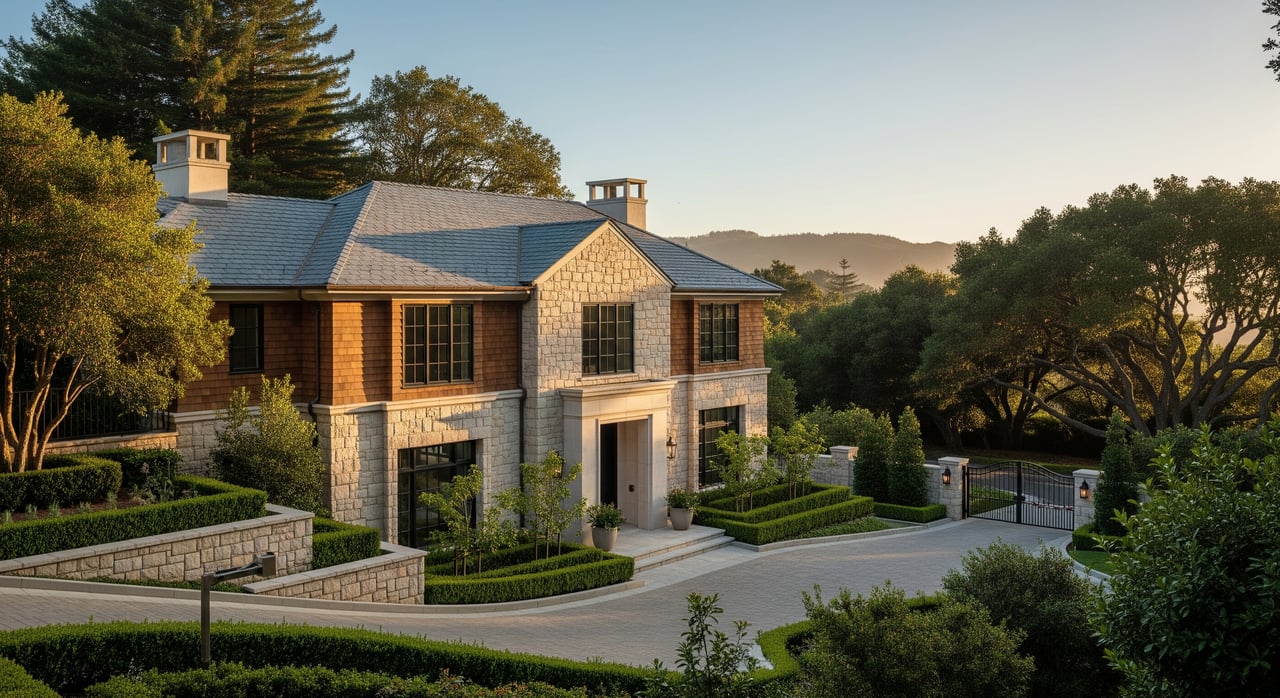
Planning exterior work in Hillsborough and wondering what the Town will ask for? You are not alone. Whether you are updating a façade, adding square footage, or building new, understanding design review early can save you time, money, and stress. In this guide, you will learn what triggers review, the steps, required materials, realistic timelines, and practical ways to avoid delays. Let’s dive in.
What design review is
Design review helps preserve neighborhood character and ensure high-quality design. It looks at building massing and scale, rooflines, siting and setbacks, exterior materials and colors, driveway and garage placement, grading and retaining walls, lighting, landscaping, and tree protection. The focus is how your project fits the surrounding context and minimizes privacy and visual impacts.
A typical review team includes Town planning staff, a design review board or similar architectural committee, and in some cases the Planning Commission or Town Council for appeals or major approvals. The Building Department becomes involved after design approval to check building code compliance and issue permits.
What triggers review
Project types that commonly require design review in Hillsborough include:
- New single-family construction.
- Additions or alterations that change exterior appearance, rooflines, or increase gross floor area beyond local thresholds.
- Changes to the building footprint or elevations visible from the street or neighboring properties.
- Significant demolitions or rebuilds on existing lots.
- New or modified retaining walls, substantial grading, or earthwork.
- Fences, gates, and driveway entries visible from public ways.
- Pools and major landscape regrading when tied to grading or visibility.
- Removal or work affecting protected trees under the Town’s tree protection rules.
Minor, non-visual maintenance like repainting the same color or like-for-like material replacement is often exempt or handled administratively. Always confirm exact thresholds with Town staff before you design.
What to include in your submittal
A complete, organized package reduces rounds of revision. Most applications include:
- Application form and filing fee.
- Architectural plans: site plan, floor plans, elevations, roof plan, and sections showing building heights and context.
- Materials and color schedule or board: exterior finishes, windows, doors, and roofing.
- Landscape plan: plantings, screening, fencing, and tree protection or removal details.
- Site and neighborhood photos: adjacent homes, street views, and public vantage points.
- Additional studies as needed: arborist report near mature trees, geotechnical report for grading or significant additions, drainage or stormwater plan, and shadow or solar studies for multi-story changes. Traffic or access studies may be requested for major alterations.
Pro tip: Provide clear labeling, dimensions, and references on every sheet. A neat, scaled set helps staff and the board evaluate your design quickly.
Step-by-step process
1) Pre-application meeting
A brief early meeting with Planning staff is highly valuable. You will confirm what triggers review, identify key issues like privacy or trees, and clarify documentation needs. This step often prevents costly redesigns.
2) Application submission
You submit the full package with fees. Aim for a thorough first submittal that includes professional reports your project will likely need.
3) Completeness review
Staff checks if your application is complete. Incomplete submittals are typically returned or placed on hold until all items arrive.
4) Public notification
Many projects require neighbor noticing. Requirements vary by project type and noticing radius. Planning staff will advise what is needed.
5) Board hearing(s)
You or your design team present the project. The board may approve, approve with conditions, continue for revisions, or deny. Larger or contested projects can take multiple hearings.
6) Decision and conditions
Approvals come with written conditions. These become part of your permit set and must be reflected in your construction drawings.
7) Appeals (if any)
Applicants or neighbors can usually appeal within defined timelines. Appeals may go to the Planning Commission or Town Council.
8) Building permit and plan check
After design approval, you apply for a building permit. Plan check reviews building code compliance and your adherence to approval conditions.
9) Inspections and final sign-off
Construction proceeds with inspections at key milestones. Final sign-off comes after the Town verifies compliance with approvals and codes.
How long it takes
Timelines vary by scope, workload, and the quality of your submittal. Typical ranges are:
- Pre-application meeting: 1 to 4 weeks to schedule.
- Completeness review: 2 to 6 weeks after submission.
- Agenda placement: many boards meet monthly or biweekly, with a 2 to 8 week lead time from completeness to first hearing.
- Small staff-level items: roughly 4 to 12 weeks total.
- Moderate projects like additions: about 3 to 6 months including revisions and hearings.
- Major projects like new homes or significant grading: 6 to 12 months or longer if appeals or environmental review are required.
- Building plan check and permit issuance: often 4 to 12 weeks depending on backlog and drawing quality.
Expect longer timelines when your project requires variances, involves complex grading, affects mature trees, or faces neighbor concerns. Build a realistic buffer into your schedule.
Ways to avoid delays
- Schedule a pre-application consultation early to confirm triggers, noticing, and likely issues.
- Hire local professionals who know Hillsborough procedures. Experienced architects, landscape architects, arborists, and contractors can anticipate board feedback.
- Submit a complete package: accurate surveys, scaled plans and sections, context photos, and a cohesive materials palette.
- Address privacy and bulk: step down massing near neighbors, add screening, and show mitigation on your elevations and landscape plan.
- Plan tree protection: expect arborist input when building near mature trees. Include protection measures and mitigation planting when removal is proposed.
- Do neighborhood outreach: explain scope, listen to privacy or screening concerns, and consider reasonable adjustments. Early support can reduce appeals.
- Anticipate conditions of approval: budget time and cost for modified landscaping, height adjustments, or added screening.
- Coordinate vendor timing: do not schedule demolition, order custom materials, or set construction start dates until design approvals and building permits are in hand.
Buyer due diligence before you renovate
If you are buying with plans to remodel, do a records check. Ask for prior design approvals, building permits, and any as-built plans. Confirm that recent exterior changes were permitted. Unpermitted work can add time and cost to your project.
Cost considerations
Beyond construction, budget for application fees, professional reports like arborist or geotechnical studies, potential mitigation planting, and possible design revisions. A complete, high-quality set can reduce rounds of resubmittal and save money overall.
Environmental review basics
Some major projects can trigger environmental review under state rules when significant impacts are possible. Environmental review can add time and may require mitigation. Planning staff will let you know if your scope qualifies.
How a local advisor helps
You want a smooth process, clear communication, and confident decision-making. A trusted local team can help you set the right strategy, connect you with proven architects and vendors, and keep you on schedule from idea to final sign-off. If you are considering a sale after improvements, a coordinated plan for design, staging, and marketing can maximize your outcome.
Ready to talk through your goals, timeline, and options for your Hillsborough project? Reach out to the Gevertz Group for a personalized plan that fits your next move.
FAQs
Do exterior paint changes need review in Hillsborough?
- Repainting the same color is often exempt or administrative, while changing colors or altering appearance may require review. Always confirm with Planning staff.
What materials are usually required for a complete submittal?
- Expect architectural plans, a materials and color schedule, a landscape plan with tree protection, site and context photos, and any needed reports such as arborist or geotechnical.
How long before construction can start after approval?
- You can start only after design approval and building permits are issued. Plan check typically takes several weeks, and final timing depends on backlog and drawing quality.
Can the review board require design changes?
- Yes. Design review is discretionary, and boards can require revisions, add conditions, or deny projects that do not meet local design guidelines or context.
Do I need an arborist report for my project?
- If work is near mature or protected trees, or if grading occurs in root zones, an arborist report is commonly required along with protection measures.
What if I disagree with the board’s decision?
- Most jurisdictions provide an appeal path to the Planning Commission or Town Council within a set timeline. Check procedures and deadlines with Planning staff.