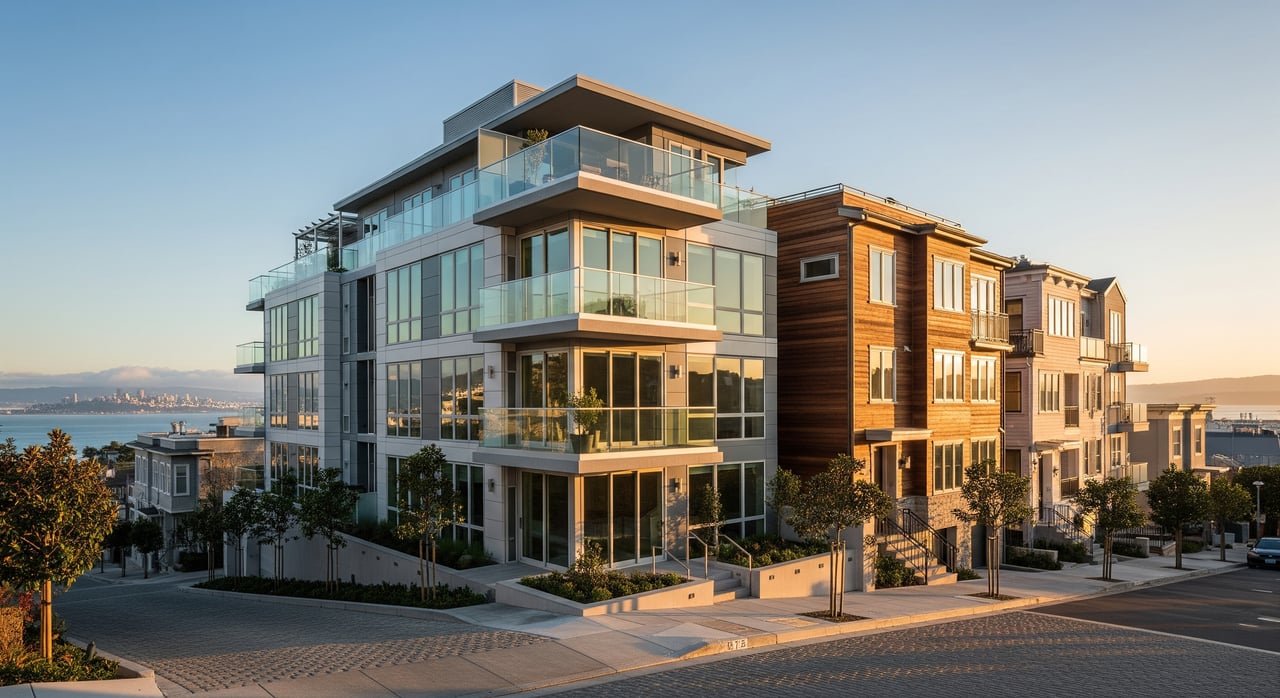
You want a home on the Peninsula that fits your life and your budget. For many San Bruno buyers, the choice comes down to a condo or a townhome. The right pick can change your monthly costs, your maintenance workload, and even how you commute. This guide breaks down the real differences in ownership, costs, and lifestyle so you can compare options with confidence.
You’ll learn how condos and townhomes work under California law, which costs to expect, and the local San Bruno factors that can sway the decision. You’ll also get a simple checklist to use when touring homes or preparing an offer. Let’s dive in.
Condo vs townhome: what you actually own
“Condo” describes a legal ownership form. You usually own the interior of the unit and share ownership of the common areas, while the homeowners association handles exterior and shared systems using monthly dues.
“Townhome” describes a housing style. In California, townhomes can be organized as a condo project or as fee‑simple ownership inside a Planned Unit Development. In a fee‑simple setup, you often own the land and the exterior, and the HOA typically manages only shared spaces or private streets. The label alone does not tell you who maintains the roof, siding, or landscaping.
California’s common‑interest developments are regulated by the Davis‑Stirling Common Interest Development Act. As a buyer, you should receive HOA disclosures that include budgets, reserve studies, CC&Rs, rules, and recent meeting minutes before closing. Review these carefully to understand responsibilities, rules, and financial health.
Financing also differs by legal form. Lenders often apply extra project‑level reviews to condos, including owner‑occupancy ratios, delinquency rates, and litigation status. For more on project requirements, see Fannie Mae’s condo and co‑op guidance.
Cost comparison: price, dues, insurance, financing
Every property is unique, but these cost categories usually drive the condo vs townhome tradeoff in San Bruno.
Purchase price
Condos often sell for less than comparable townhomes because they typically offer less private outdoor space and fewer private garages. Townhomes, especially fee‑simple homes with a garage and small yard, can command a premium. In San Bruno, small differences in privacy, parking, and location near transit can lead to noticeable price gaps.
HOA dues and special assessments
Condo dues tend to be higher because they fund exterior maintenance, roof work, landscaping, and any amenities. Townhome dues can be lower if the owner is responsible for exterior items. That said, townhomes inside condo‑style HOAs may still have higher dues. Always read the budget, reserve study, and recent meeting minutes to spot upcoming projects or special assessments.
Insurance differences
- Condos: You typically carry an HO‑6 policy for interior finishes, personal property, loss of use, and liability. The HOA master policy may cover the building shell and common areas. Scope varies by HOA.
- Townhomes (fee‑simple): You usually carry a broader dwelling policy that covers the structure plus liability. You are responsible for the exterior and often the roof.
Earthquake insurance is a separate consideration for both. HOA master policies rarely include it. Given Bay Area seismic risk, it is worth getting quotes and learning how deductibles and loss assessments would work. The California Earthquake Authority provides consumer education and policy information.
Maintenance responsibilities
- Condos: The HOA usually handles exterior work and common systems. You benefit from predictability when reserves are healthy, but you face the risk of special assessments if funding is low.
- Townhomes (fee‑simple): You manage or hire out exterior upkeep, roof, and landscaping. You gain control and can pace projects, but your time and cash planning matter more.
Financing and mortgage access
Condo financing can be more sensitive to project issues such as litigation, investor share, or unpaid dues, which can limit mortgage options or affect rates and down payment requirements. Fee‑simple townhomes usually face fewer project‑level hurdles, though your individual credit and down payment still apply. Ask your lender to review the project early, especially if you plan to use low‑down‑payment or government‑backed loans.
Taxes and closing costs
California’s property tax rules apply similarly to both types, with assessed value typically based on your purchase price. HOA dues are usually not tax‑deductible for a primary residence. For transfer taxes and local fees, confirm details for your specific property with your escrow and title team. The San Mateo County Assessor‑County Clerk‑Recorder provides county‑level tax resources you can reference during due diligence.
Lifestyle and maintenance tradeoffs in San Bruno
Space and layout
Townhomes often live more like single‑family homes with multi‑level layouts, private entries, and a garage. Condos can offer single‑level living, elevators, and amenities that simplify daily routines. Consider stairs, storage needs, and how you use outdoor space.
Privacy and noise
Condos can have higher density and shared hallways, which may increase neighbor noise. Townhomes usually share only side walls and offer more separation between entries. Walk the property at different times of day to gauge noise and activity.
Parking and storage
Parking is a major convenience factor in San Bruno. Many townhomes include a private garage and sometimes a driveway. Condos may have assigned spaces or a shared garage with limited storage. Verify the number of deeded spaces, EV charging options, and guest parking rules in writing.
Rules, rentals, and renovations
Both condos and townhomes have CC&Rs that regulate pets, rentals, exterior changes, satellite dishes, and use of common areas. Condos more commonly set rental caps, which matters if you want the flexibility to rent later. Review rules before you fall in love with a unit, especially if you have pets or plan to remodel.
Amenities and management
Condo communities may include amenities such as a pool, gym, or landscaped courtyards. Those are convenient but add ongoing costs. The quality of HOA management also affects day‑to‑day satisfaction. Responsive managers make a big difference for repairs, landscaping, and shared utilities.
Safety and security
Condo buildings can offer controlled access and secured parking. Townhomes rely more on neighborhood conditions and your own security setup. Evaluate lighting, sightlines, and access controls during showings.
San Bruno specifics to factor in
Commute and transit
Access to transit and major employers can change both lifestyle and resale potential. San Bruno’s BART station sits near downtown, with schedules and route details available on the San Bruno BART station page. Proximity to SFO and freeway access to US‑101 and I‑280 are also major draws for frequent travelers and commuters.
Neighborhood context
Demand can vary between downtown areas near BART and hillside neighborhoods with more space and views. Think about your daily patterns: walkability, parking, topography, and wind exposure can all affect comfort and costs.
Development and amenities
Ongoing planning and redevelopment efforts, including areas near Tanforan and downtown, can influence future supply, HOA styles, and amenity offerings. For current planning updates and permitting guidance, consult the City of San Bruno.
Schools and districts
Most of San Bruno is served by the San Bruno Park Elementary School District and the San Mateo Union High School District. If school pathways matter to you, confirm attendance areas directly with the districts and verify transportation needs.
Seismic and flood considerations
Older low‑rise buildings in the Bay Area may be subject to seismic retrofit needs over time, which can lead to HOA projects or special assessments. Review reserve studies and past meeting minutes to understand plans. For flood exposure, review your address on the FEMA Flood Map Service Center and ask your insurance broker for a property‑specific quote.
Your due diligence checklist
Use this list to compare a San Bruno condo vs townhome on equal footing.
- Confirm legal form: Is the townhome fee‑simple or condo‑form? Read the preliminary title report and CC&Rs. The Davis‑Stirling Act sets disclosure standards for these documents.
- Compare monthly costs: HOA dues versus estimated exterior upkeep for a fee‑simple townhome. Include roof, siding, landscaping, and common utilities.
- Review HOA health: Budget, financials, reserve study date and funding level, and 12 to 24 months of meeting minutes. Look for planned projects, special assessments, and delinquency rates.
- Verify insurance: What does the HOA master policy cover, and what are deductibles? Price your individual policy plus earthquake coverage using the California Earthquake Authority as a starting resource.
- Check financing early: Ask your lender to review the condo project’s eligibility and any limitations described by Fannie Mae’s condo guidance.
- Confirm parking and storage: Deeded vs assigned spaces, EV charging, guest parking rules, and storage lockers. Get it in writing.
- Inspect the property: General, roof, and pest inspections. Clarify responsibilities for shared systems in the CC&Rs.
- Verify local taxes and fees: Title and escrow can confirm transfer taxes and closing costs. For county tax references, see the San Mateo County Assessor‑County Clerk‑Recorder.
- Consider commute and lifestyle: Visit at different times. Test the walk to transit. Review schedules at the San Bruno BART station page.
- Ask about upcoming changes: Check the City of San Bruno for planning updates that could influence future supply or amenities.
Which is right for you?
Choose a condo if you want predictable exterior maintenance, convenient amenities, and a location that simplifies your commute. Choose a townhome if you value a private garage, more autonomy over your exterior, and a home that lives closer to a single‑family lifestyle.
If you are comparing two great options in San Bruno, focus on the legal form, HOA financials, insurance, and how each home fits your daily routine. A clear picture of monthly costs and maintenance responsibilities will usually reveal the better long‑term fit.
When you want local guidance, work with a team that knows every corner of the mid‑Peninsula. With more than $350M in lifetime sales, 250+ families served, RealTrends recognition, and a top small‑team ranking with Coldwell Banker on the Peninsula, the Gevertz Group brings boutique, hands‑on service with national‑level marketing reach. If you are weighing condo vs townhome tradeoffs in San Bruno, we can help you compare true costs, read HOA documents, and plan a smart offer strategy.
Ready to take the next step? Request a Personalized Market Consultation with the Gevertz Group to map your best path forward.
FAQs
What is the core difference between a condo and a townhome in California?
- A condo is a legal form where you own the interior and share common areas through an HOA, while a townhome is a style that can be either condo‑form or fee‑simple where you may own the land and exterior; always confirm with title and CC&Rs.
How do HOA dues typically differ for San Bruno condos vs townhomes?
- Condo dues are often higher because they cover exterior work and amenities, while fee‑simple townhomes may have lower dues but require you to budget for roof, siding, and landscaping; review each HOA budget to compare apples to apples.
Can I use conventional or government‑backed financing for a San Bruno condo?
- Often yes, but condo projects must meet lender or agency criteria such as owner‑occupancy and litigation status; ask your lender to review the project early using guidance like Fannie Mae’s condo standards.
Do HOA master policies in San Bruno usually include earthquake insurance?
- It is uncommon for HOA master policies to include earthquake coverage for owners, so most buyers consider separate policies; start your research with the California Earthquake Authority.
What should I look for in the HOA packet before writing an offer?
- Review the budget, financials, reserve study, meeting minutes, CC&Rs, rules, insurance declaration, and any litigation or special assessments to understand costs, restrictions, and upcoming projects.
How does proximity to BART affect condos and townhomes in San Bruno?
- Homes close to transit can offer daily convenience and attract a wider buyer pool, so evaluate walkability and timing with the San Bruno BART station schedule when comparing options.