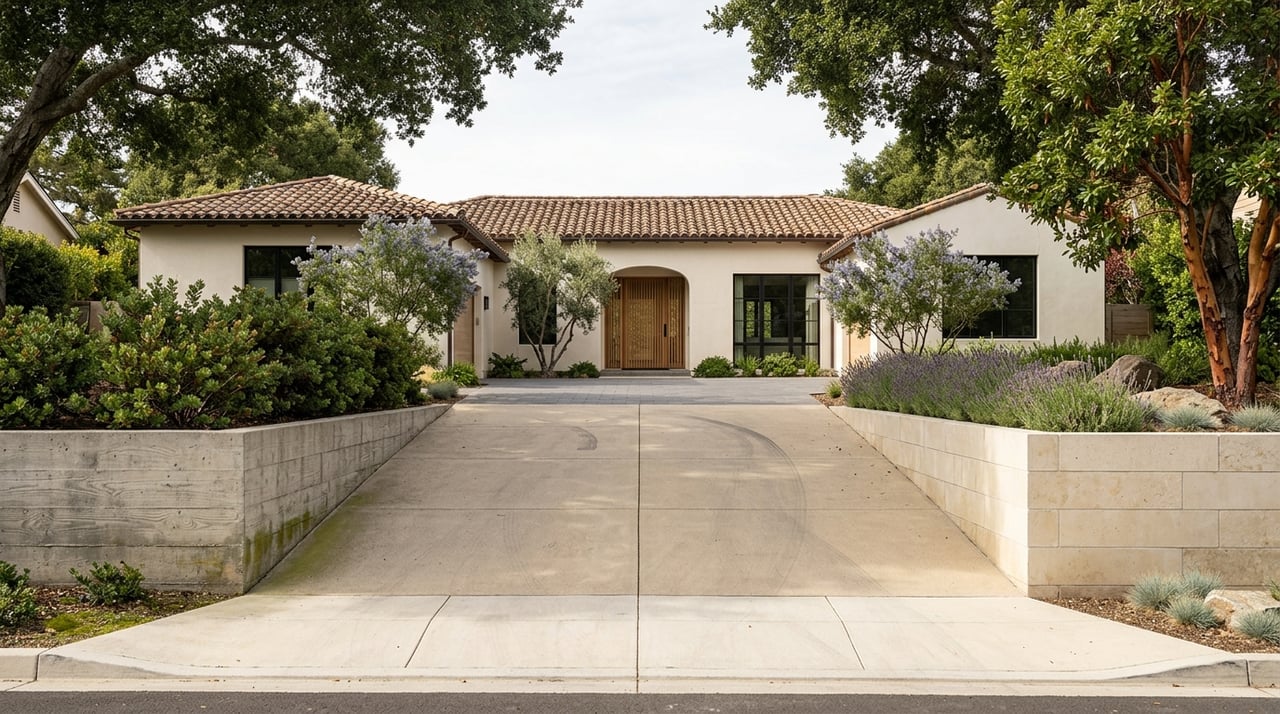
What is a Hillsborough home really worth? In a market filled with large estates, varied lot conditions, and loosely defined neighborhood pockets, one townwide average rarely tells the full story. If you are buying or selling in Hillsborough, understanding how micro-markets shape pricing can help you make smarter decisions, avoid broad assumptions, and position a property more effectively. Let’s dive in.
Why Hillsborough Needs Micro-Market Analysis
Hillsborough is not a typical suburban market. According to the U.S. Census QuickFacts for Hillsborough, the town has just 11,171 residents across 6.17 square miles, with a 93.0% owner-occupied rate and a median household income above $250,000 in the 2019-2023 ACS.
The town is also primarily low-density single-family residential, with no commercial or industrial uses. Hillsborough’s land use pattern includes homes, public facilities, parks and open space, schools, Burlingame Country Club, and Hillsborough Racquet Club. The town also controls 259 acres of open space that cannot be developed or sold, which further limits supply and helps explain why pricing can vary so sharply from one pocket to another.
Hillsborough’s development history adds another layer. The town grew from large estates that were later subdivided, and its history and design framework still reflects that estate tradition. Today, the Architecture and Design Review Board helps preserve a high standard of design and orderly development, which means homes with similar square footage can still land in very different pricing bands.
How Hillsborough Pockets Differ
Hillsborough does not fit neatly into one uniform identity. The town’s Neighborhood Network map groups areas into North, South, and West pockets, including places like Country Club, Fagan, Hillsborough Oaks, Skyfarm, Lakeview, Carolands, Tobin Clark, and Uplands.
These names matter because buyers and sellers often experience the market at the pocket level, not the town level. Even if MLS boundaries do not perfectly match every local label, these area identities still shape expectations around setting, privacy, topography, and access.
In practice, that means two homes in Hillsborough may share a mailing address but compete in different buyer pools. A property on a flatter parcel in one pocket may be valued differently than a similar-sized home in a steeper hillside setting with a more complex buildable envelope.
What Creates Pricing Gaps in Hillsborough
Lot size and frontage
In Hillsborough, land is a major value driver. The town’s zoning code sets a minimum net lot area of one-half acre and requires at least 150 feet of continuous frontage on a public street, with hillside and width standards sometimes increasing those minimums, as outlined in Title 16 zoning regulations.
That makes lot geometry especially important. A parcel that appears similar on paper may function very differently based on frontage, shape, access, and usable outdoor area. Since the town notes that exact lot size often requires a survey, sellers and buyers should rely on property-specific documentation rather than assumptions.
Slope and buildability
Topography is another major pricing factor. Hillside rules are designed to preserve natural features and reduce erosion and service burdens, and some larger estate areas face real topographical and access constraints.
For that reason, a flat or more usable site can command a premium over a more challenging lot. If a buyer is weighing future expansion, outdoor amenities, or a rebuild, the buildable envelope often matters as much as the house itself.
Architecture and approval path
Design quality also plays a big role in Hillsborough pricing. The Architecture and Design Review Board reviews new homes, major additions, landscaping, fencing, and gates, and recent agenda items reflect a broad range of styles, from French Manor to Transitional and contemporary shingle-inspired homes.
That variety supports price dispersion. A home with strong architectural character, a cohesive renovation, or a clearer path for future approvals may attract more interest than a similarly sized property with less design appeal or more uncertainty around changes.
Privacy, amenities, and risk factors
Because Hillsborough has no commercial or industrial uses, value often connects to privacy, estate utility, and proximity to amenities inside or near town. The town also notes that many properties are within the Wildland Urban Interface, so defensible space, fire-hardening, and insurance considerations can influence how buyers evaluate a home.
In addition, Hillsborough allows ADUs and recognizes detached structures such as cottages, pool houses, and guesthouses through its planning framework. For some buyers, those features add meaningful utility and can support stronger pricing when they are legally established and well integrated into the property.
Why Townwide Averages Can Mislead
Current market snapshots show a thinly traded luxury market where pricing depends heavily on the specific property and the time window used. Redfin’s Hillsborough market page reported a February 2026 median sale price of $5.6 million, 6 homes sold, and a 13-day median time on market.
At the same time, the research report notes that Zillow’s March 31, 2026 Home Values Index showed an average home value of $5.28 million, while Realtor.com reported a $7.59 million median home sale price, 32 homes for sale, and a 33-day median time on market. These differences do not necessarily conflict. They reflect different methodologies and time periods, which is why broad averages should be treated as directional rather than precise.
This is especially true in Hillsborough because one or two sales can swing the numbers. In a market with relatively few transactions and many unique properties, median price alone can flatten important differences in lot utility, views, privacy, condition, and future potential.
What Neighborhood-Level Data Shows
The spread between Hillsborough pockets is a good example of why micro-market pricing matters. Neighborhood-level data from Redfin shows meaningful variation even within the same town.
Lakeview reported a $4.42 million median sale price in February 2026, with 5 sales, 11 days on market, and a 110.8% sale-to-list ratio, according to Redfin’s Lakeview market page. Skyfarm reported a $6.8 million median with only 2 homes sold and a 33-day market cadence, while Carolands reported a $4.58 million median, 5 sales, and an 80-day median time on market.
Hillsborough Oaksbridge shows just how volatile these figures can be. One recorded sale produced a $25 million neighborhood median, which is a clear reminder that in a thin luxury market, a single estate can distort the headline number.
For context, Hillsborough also sits far above the broader county market. MLSListings county data for March 2025 showed San Mateo County’s median single-family home price at $2.05 million, with 281 sales and 9 median days on market. Hillsborough behaves much more like an upper-tier luxury submarket than a typical countywide comp set.
Pricing Strategy for Sellers
If you are selling in Hillsborough, your pricing strategy should start with the specific pocket and then narrow further to the property’s physical and legal characteristics. The best comp set should reflect not just square footage, but also slope, frontage, privacy, view corridor, landscaping quality, and the home’s renovation or rebuild potential.
A flat lot with strong architecture and a clear approval path may belong in a very different value band than a similar-sized home on a constrained hillside site. That is why a luxury pricing strategy here should be evidence-based and property-specific rather than anchored to a townwide average.
Sellers can strengthen their position by preparing a detailed pre-listing package. Helpful materials may include:
- A current survey
- Lot dimensions and frontage details
- Permit history
- Design or planning documents
- Landscaping concepts
- Records of fire-hardening or defensible-space improvements
This kind of preparation can make it easier for buyers to understand what they are paying for. It can also reduce uncertainty, which matters in a market where due diligence is often a major part of value.
Pricing Strategy for Buyers
If you are buying in Hillsborough, it helps to look beyond the headline list price and ask what is actually driving value. In many cases, the house itself is only part of the story.
You may want to verify the buildable envelope, lot dimensions, access, and whether the property has any legal nonconformity or subdivision limitations. If future improvements matter to you, it is also wise to understand whether ADRB review may apply and how the site’s slope or setting could affect your plans.
Insurance and wildfire-related considerations deserve attention as well. If a property sits in an area affected by Wildland Urban Interface considerations, that can influence both operating costs and buyer demand.
The Bottom Line on Hillsborough Pricing
In Hillsborough, value is usually shaped less by house size alone and more by the interaction of land, architecture, privacy, approvals, and pocket identity. That is the clearest reason micro-market analysis matters.
Whether you are preparing to sell a longtime estate or evaluating a new purchase, the goal is the same: understand how your specific property fits into its immediate competitive landscape. That level of detail can lead to better pricing, stronger negotiations, and a more confident decision-making process.
If you want a more tailored view of how your property or target area fits into today’s Hillsborough market, the Gevertz Group offers personalized market guidance backed by deep Peninsula knowledge and a high-touch approach.
FAQs
What does “micro-market” mean in Hillsborough real estate?
- A micro-market refers to a specific Hillsborough pocket or property grouping where pricing is shaped by factors like lot usability, topography, privacy, architecture, and buyer demand rather than townwide averages.
Why are Hillsborough home prices so different from one neighborhood pocket to another?
- Hillsborough pricing can vary widely because estates differ in lot size, frontage, slope, views, approval potential, and design quality, and the market has relatively few sales.
How should sellers price a luxury home in Hillsborough?
- Sellers should use a property-specific comp strategy that matches the home’s pocket, site characteristics, condition, and future potential rather than relying on a town median or county average.
What should buyers verify before buying a Hillsborough property?
- Buyers should confirm lot dimensions, buildable envelope, frontage, possible ADRB review needs, and any wildfire or insurance-related considerations before relying on the asking price alone.
How does Hillsborough compare with the broader San Mateo County market?
- Hillsborough generally operates as a higher-end luxury submarket, with home prices far above the county’s median single-family pricing and greater variation from one sale to the next.